Tax Planning · Northborough, MA

Tax Planning for Retirement in Central Massachusetts

You spent decades building your savings. The next job is keeping more of it. We coordinate Roth conversions, withdrawals, RMDs, Medicare premiums and Massachusetts taxes into one clear game plan.

CFP® · ChFC® · IRS Enrolled Agent (EA) · AEP® · Fiduciary Team

The Paycheck Stops. The Tax Bill Doesn't.

For thirty years, taxes mostly took care of themselves. Your employer withheld from every paycheck, your 401(k) contributions lowered your income, and April was a matter of handing a folder to your CPA.

Retirement changes that rhythm. The day the paycheck stops, you become the one deciding where your income comes from, how much of it shows up on your tax return, and when. That can feel like a lot of new responsibility. It is also, for many families, the single biggest planning opportunity of their financial lives.

For households with $2 million to $10 million in net worth, the stakes are real. How you draw income over the next twenty-five years can shape your lifetime tax bill, your Medicare premiums, what your surviving spouse lives on, and what your children eventually inherit. At ClearPath, retirement tax planning is how we clear the brush on that trail so each decision is made on purpose, not by default.

What Changes

Why Retirement Is a Tax Planning Turning Point

Retirement is not just a new chapter for your calendar. It is a new chapter for your tax return. Income that used to arrive as one steady W-2 now comes from several sources, and each one is taxed differently: IRA and 401(k) withdrawals as ordinary income, brokerage accounts at capital gains rates, Roth accounts potentially tax-free, and Social Security partly taxable depending on everything else. Three shifts matter most.

You Gain Control of Your Bracket

For the first time in decades, you may have real say over your taxable income each year. That control is valuable, but only if someone uses it deliberately. We look at which accounts should fund the paycheck, in what order and in what amounts, so taxable income stays smooth rather than spiking in some years and wasting low brackets in others.

The Window Before RMDs

The years between your last paycheck and the start of required minimum distributions (the mandatory IRA withdrawals that begin at 73, or 75 if you were born in 1960 or later) are often the lowest-income years of your adult life. That runway can be the right time for partial Roth conversions or strategic withdrawals. Once RMDs and Social Security stack up, the window narrows.

The Massachusetts Layer

Massachusetts adds its own terrain. The Commonwealth taxes most income at a flat 5%, adds a 4% surtax on income above roughly $1.1 million (a threshold indexed each year), and taxes estates above $2 million, one of the lowest thresholds in the country. The good news is that Massachusetts does not tax Social Security benefits. A plan built only around federal brackets can miss half the map.

Tax and Planning at One Table

A CFP® Professional Who Is Also an IRS Enrolled Agent

Most retirees have a financial advisor on one side of town and a tax preparer on the other, and they rarely talk before decisions are made. ClearPath was built to close that gap.

Ryan Kittredge is both a CERTIFIED FINANCIAL PLANNER® professional and an IRS Enrolled Agent, a federal tax credential granted by the Internal Revenue Service. Molly Brown, CFP®, AEP®, brings deep estate planning coordination to the same conversation. That means the person modeling your Roth conversion understands both the planning goal and the tax mechanics behind it.

We do not replace your CPA. We work alongside them, sharing projected income, proposed conversion amounts and withholding plans before anything is implemented, so your plan and your tax return are working from the same playbook.

Who We Help

Is Retirement Tax Planning Right for You?

Our retirement tax planning work tends to fit families in one of these situations. If one of them sounds familiar, it is probably worth a conversation.

Pre-Retirees With Large Pre-Tax Balances

You have done the hard work of saving into 401(k)s, 403(b)s and IRAs. Now you want to know how much of that balance actually belongs to you after taxes, and how to avoid a wave of RMDs later.

The Recently Retired

You are in the window right now: paycheck stopped, Social Security not yet started. This is often the most valuable stretch for Roth conversion planning, and it does not last forever.

Physicians, Executives and Business Owners

High earners often face one-time events: a practice sale, deferred compensation payouts, a concentrated stock position or a large pension election. Each can trigger the Massachusetts surtax or Medicare surcharges if it is not planned ahead.

Couples Planning for the Surviving Spouse

When one spouse passes, the survivor often files as single with nearly the same income. That can mean higher brackets for decades. Planning for that scenario today can protect the person you care about most.

What We Do

Our Retirement Tax Planning Services

Tax strategies are tools, not goals. We start with what you want your money to do, then choose the tools that fit. Every client plan is built against a multi-year tax projection and revisited each year as your income, the markets and the law change.

Multi-Year Tax Projection

We map your expected income, brackets and thresholds year by year, from your last working years through your first decade of RMDs, so you can see the whole trail before you start down it.

Roth Conversion Roadmap

Roth conversions are rarely all-or-nothing. We model partial conversions sized to your bracket, cash on hand to pay the tax, and your legacy goals, then write it down as a year-by-year roadmap updated against your actual return.

Withdrawal Sequencing

Which account pays you first matters. We coordinate taxable, tax-deferred and Roth accounts with Social Security and pension timing to build a retirement paycheck that is tax-aware without sacrificing flexibility.

RMD and Charitable Strategy

For charitably inclined clients, qualified charitable distributions after age 70½, gifts of appreciated stock and donor-advised funds can make giving more tax-efficient. We coordinate the mechanics before the money moves.

Medicare IRMAA Guardrails

Medicare premiums are income-tested, based on your tax return from two years earlier, and the thresholds act like cliffs. We build IRMAA thresholds into every projection so surcharges are a choice, not a surprise.

Massachusetts Surtax and Estate Coordination

Home sales, business sales and large conversions can push a single year over the surtax line. We time and spread income where possible, and coordinate with your estate plan so income tax and Massachusetts estate tax decisions work together.

Getting Started

Your First Step: A Retirement Tax Assessment

A Retirement Tax Assessment is a focused first meeting designed to show you where you stand before you commit to anything.

01

Bring the Moving Pieces

Your most recent tax return, current account statements, and any pension or Social Security estimates. The starting point does not have to be perfectly organized. That is part of what we help with.

02

We Build the Projection

Our team projects your retirement income and taxes over the next several years, including RMDs, Medicare thresholds and Massachusetts rules.

03

You Leave With Clarity

We walk you through the two or three planning opportunities that matter most for your situation and give you a clear answer about whether ClearPath is the right fit.

Retirement Readiness Checklist

Free Resource

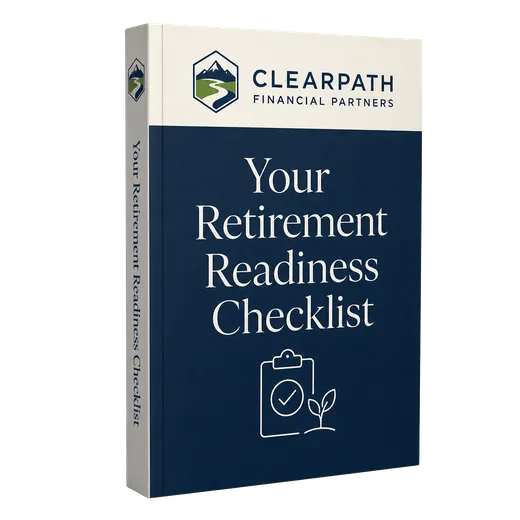
Download the Retirement Readiness Checklist

A practical checklist for the final years before retirement, covering income, taxes, Social Security, Medicare and estate coordination. Use it to organize your questions before we meet.

Educational resource only. Not a substitute for personalized tax, legal or investment advice.

The Bigger Picture

Taxes Matter. They Shouldn't Wag the Dog.

The lowest-tax answer is not always the best planning answer. A strategy that trims this year's bill can raise your lifetime taxes. Holding a concentrated stock position just to avoid capital gains can put your retirement at more risk than the tax itself. That is why tax planning at ClearPath never stands alone. It is woven into your retirement income plan, your investment strategy and your estate plan, so every decision moves the whole plan forward.

Trusted Guidance

Trusted by Professionals and Families Across Massachusetts

Clients share their experiences on our Google Business profile.

CFP® Professional · Fiduciary Advisor · LPL Financial · Private Advisor Group

Common Questions

Retirement Tax Planning Questions We Hear Most

Should I do Roth conversions before RMDs begin?

It may be worth evaluating, especially if you have large pre-tax balances and a few lower-income years between retirement and the start of Social Security or RMDs. The right amount depends on your current bracket, your expected future bracket, Medicare premium thresholds, and whether you can pay the tax from savings outside the IRA. Conversions are usually most effective as a partial, year-by-year process rather than one large move. We model several conversion amounts and coordinate with your tax professional before anything is implemented.

How do taxes change after I retire?

Your income sources change, and each one is taxed differently. Traditional IRA and 401(k) withdrawals are taxed as ordinary income, taxable brokerage accounts may produce capital gains, qualified Roth withdrawals may be tax-free, and part of your Social Security may be taxable depending on your other income. Many retirees also gain more control over their taxable income than they had while working, which creates planning opportunities. Required minimum distributions, beginning at 73 (75 if born in 1960 or later), can push income higher later, which is why the planning usually starts years in advance.

How does the Massachusetts millionaires tax affect retirees?

Massachusetts adds a 4% surtax on taxable income above roughly $1.1 million, a threshold that adjusts annually. Most retired households never reach it in a normal year. The risk is usually a one-time event: selling a long-held home or business, a large IRA withdrawal, or an aggressive Roth conversion. Timing and spreading income across tax years can make a meaningful difference, but those decisions need to be made before the transaction, not after.

What is IRMAA, and how can my retirement income decisions affect it?

IRMAA, the Income-Related Monthly Adjustment Amount, is an extra premium higher-income Medicare beneficiaries pay for Part B and Part D. It is based on your tax return from two years earlier, and the thresholds work like cliffs: going one dollar over can trigger the full surcharge for that tier. Roth conversions, capital gains and RMDs can all affect it. If your income dropped because of retirement, you may be able to request a reduction using Form SSA-44. We build IRMAA thresholds into every tax projection.

Which account should I withdraw from first in retirement?

There is no universal order. The right sequence depends on your income needs, tax brackets, Social Security and pension timing, future RMDs and how much flexibility you want later. Sometimes it makes sense to draw from taxable accounts first; other times, taking IRA withdrawals or Roth conversions in low-income years reduces pressure later. We coordinate all three account types into one tax-aware retirement paycheck.

Is Social Security taxed in Massachusetts?

Massachusetts does not tax Social Security benefits, although a portion of your benefit may still be subject to federal income tax depending on your other income. That is one reason Social Security timing, IRA withdrawals and Roth conversions should be modeled together.

What is an Enrolled Agent, and why does it matter for retirement planning?

An Enrolled Agent (EA) is a tax professional credentialed by the IRS. At ClearPath, Ryan Kittredge holds both the EA and CFP® designations, which means the person designing your retirement income strategy also brings technical tax depth to the conversation. We still coordinate with your CPA or tax preparer, who confirms tax treatment and reporting before implementation.

Do you prepare tax returns or replace my CPA?

No. Our role is planning and coordination: projecting your taxes, identifying opportunities and helping decide what should happen before year-end. Your CPA or tax preparer handles the return itself. In our experience, planning works best when both sides talk before decisions are made, and we make that conversation easy.

Who is a good fit for ClearPath's retirement tax planning?

We typically work with pre-retirees and retirees across Central Massachusetts and MetroWest with $2 million to $10 million in net worth who want the tax and estate side of retirement coordinated. If you are outside that range, we are glad to point you toward a trusted resource.

Fiduciary · Local · Planning-First

Ready to See Your Retirement Tax Picture Clearly?

If retirement is a few years away, or you have recently made the leap, now is a good time to pressure-test the plan. Bring your most recent tax return and account statements. We will map the years ahead and show you where the opportunities are.

The opinions voiced on this page are for general information only and are not intended to provide specific advice or recommendations for any individual. To determine which strategies or investments may be suitable for you, consult the appropriate qualified professional prior to making a decision. Individual tax matters should be discussed with your tax professional. Tax laws, thresholds and limits referenced here are subject to change.

Securities offered through LPL Financial, Member FINRA/SIPC. Investment advice offered through Private Advisor Group, a registered investment advisor. Private Advisor Group and ClearPath Financial Partners are separate entities from LPL Financial.

Copyright © 2026 - ClearPath Financial Partners | Website by Cold SpringDisclosure: Securities offered through LPL Financial, member FINRA/SIPC. Investment advice offered through Private Advisor Group, a registered investment advisor. Private Advisor Group & ClearPath Financial Partners are separate entities from LPL Financial. The LPL Financial registered representatives associated with this website may discuss and transact business only with residents of the states in which they are properly registered and licensed. No offers may be made or accepted from any resident of any other state.Check the background of this firm on FINRA’s BrokerCheck.